

In a decisive move aimed at intensifying the national crusade against illegal mining and rehabilitating Ghana’s heavily degraded river systems, the Government of Ghana has formally inaugurated a second contingent of 530 Blue Water Guards. This new batch of recruits joins the frontline of a strategic environmental initiative committed to combating the persistent threat of galamsey—illegal small-scale mining—which has wreaked havoc on the country’s freshwater bodies.
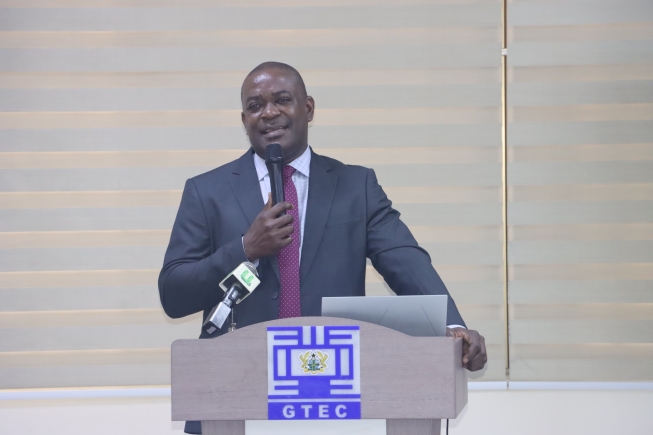
The official inauguration ceremony took place at the Ezinlibo Naval Base in the Western Region and was attended by dignitaries, security officials, and stakeholders in the natural resources sector. The event was led by the Minister for Lands and Natural Resources and Member of Parliament for Ellembelle, Hon. Emmanuel Armah-Kofi Buah. In his keynote address, the Minister described the deployment as a significant milestone in the ongoing mission to reclaim Ghana’s rivers from ecological devastation.
“This is not just another ceremony,” the Minister declared, addressing the newly trained guards. “It marks a pivotal moment in our collective journey to restore hope, dignity, and purity to our river systems. We are not merely launching an enforcement force—we are reigniting a national covenant with the land and water that sustain our people.”
Blue Water Guards: The Vanguard of River Conservation
The Blue Water Guards form the operational backbone of the government’s Blue Water Initiative, a bold and proactive response to the rapid deterioration of water bodies due to illegal mining activities. Since its launch in 2024, the initiative has been central to the government’s environmental protection strategy. It was developed in recognition of the urgent need to tackle pollution at its source, especially in riverine ecosystems most vulnerable to illegal mining operations.
The first deployment, consisting of 453 personnel, was stationed in critical river zones, particularly in regions with intense mining activity. These trained guards have since played a pivotal role in monitoring river conditions, identifying and reporting unauthorized mining activity, and assisting law enforcement agencies in real-time responses to environmental violations. Early results from their efforts have shown promising improvements in water quality and the curbing of illicit mining in key areas.
With the introduction of the second batch, the government is expanding the reach and impact of this initiative. The newly inaugurated group underwent rigorous training under the Ghana Navy’s Riverine Command, equipping them with the necessary skills in surveillance, environmental monitoring, community engagement, and tactical enforcement.
The Dire Toll of Galamsey
Minister Buah used the platform to paint a sobering picture of the environmental and social consequences of illegal mining, known locally as galamsey. He lamented the transformation of once-thriving rivers into channels of toxic sludge due to uncontrolled mining activities that use hazardous chemicals and destructive methods.
“What used to be pristine sources of drinking water and livelihoods for farmers and fisherfolk are now unsafe, muddy, and dead,” he said. “In some parts of the Western and Central Regions, water treatment plants have been forced to shut down because the rivers have become too contaminated to process. The situation is unsustainable.”
He emphasized that the goal is not to oppose mining as an economic activity. Rather, the government is drawing a clear line between regulated, responsible mining and lawless, environmentally destructive operations.
“Mining itself is not the enemy,” he affirmed. “When managed correctly, it has the power to uplift entire communities, create jobs, and boost our economy. But when driven by greed and conducted outside the law, it becomes a menace—one that we will not tolerate.”
A Mission of Purpose and Accountability
As the recruits stood in their newly issued uniforms, Minister Buah delivered a charge that resonated with purpose and duty. Drawing inspiration from Ghana’s history of civic and youth-driven service movements, he likened the guards’ mission to that of the “Young Pioneers” of earlier generations—individuals who were called to act with courage, commitment, and integrity.
He laid out three core responsibilities that define their role:
- Monitor and Protect: The guards are to function as vigilant custodians of the rivers, monitoring ecological health and preventing illegal mining.
- Enforce the Law: Working in collaboration with national security and regulatory bodies, they are expected to take action against offenders, ensuring that polluters face legal consequences.
- Engage Local Communities: The guards are also tasked with fostering awareness and local stewardship, empowering residents to participate in protecting their natural resources.
He reiterated that the government, through the National Anti-Illegal Mining Operations Secretariat (NAIMOS), would provide logistical and institutional support to the guards and emphasized that merit and performance would not go unnoticed.
“We are looking not only for compliance but for leadership,” he said. “Those who go above and beyond in service will be recognised and elevated. This is a call to serve with distinction.”
Pathways to Legal Mining: A Parallel Track for Reform
To provide sustainable alternatives to illegal mining, the Minister announced the upcoming launch of the Responsible Cooperative Mining and Skills Development Programme. This initiative seeks to rehabilitate and transition illegal miners by integrating them into formalized cooperatives that operate within the framework of national mining laws and environmental standards.
The program will offer artisanal miners access to modern equipment, technical training, and support for forming legally recognized cooperatives. It aims to transform illegal mining from an adversarial issue into an opportunity for regulated community-based economic development.
“We are not only enforcing the law,” the Minister said, “we are also offering a lifeline—a better way to mine that preserves both livelihoods and our environment.”
He praised the collaboration between the Ministry and the Ghana Navy and expressed optimism that the combination of military discipline, community involvement, and institutional backing would lead to lasting change.
A National Movement to Restore Life to Ghana’s Rivers
As the ceremony concluded, the Minister offered words of encouragement and unity, assuring the guards that their work is vital to the future of Ghana.
“The people of Ghana stand behind you,” he affirmed. “Let the rivers run clean again. Let them sparkle blue with life, as they once did. This is not the end—it is the beginning of a national movement for environmental renewal.”
The inauguration of the second batch of Blue Water Guards marks yet another milestone in the government’s comprehensive and multipronged strategy to protect Ghana’s water resources. As the country continues to wrestle with the environmental and economic fallout of illegal mining, the deployment underscores a growing national consensus: the time to act is now, and the mission to protect Ghana’s natural heritage must be pursued with resolve, innovation, and unity.
Edited by: KENNEDY AMPONSAH NTI
EASTERN FM 105.1 MHZ